
Opening a US bank account for non-US residents can help international founders receive payments from US customers, pay business expenses, and manage revenue in US dollars. In this guide, we explain the eligibility requirements, documents, EIN process, and application steps for founders in the UK and Gulf countries.
If you are a founder based in the United Kingdom, the United Arab Emirates, Saudi Arabia, or another Gulf country, you may be able to apply for a US business account without personally living in the United States. Approval is not guaranteed, and some providers restrict applications from particular countries or regions.
This guide explains how to open a US bank account for non-US residents, which documents to prepare, how to obtain an Employer Identification Number (EIN), and what to check before applying to providers such as Mercury or Relay Financial.
Important: This article focuses on business accounts for eligible international founders, including owners of US LLCs and corporations. Personal bank accounts have different requirements.
Requirements for a US Bank Account for Non-US Residents
Yes. Some US financial providers accept applications from businesses registered in the United States even when their owners live abroad. You do not necessarily need US citizenship, a US passport, or US residential status to apply for every business account.
However, the rules vary by provider. A company registered in the United States may still be ineligible if its owners live in a restricted country, its business activities are unsupported, or it cannot provide the required address and verification documents.
Before applying, distinguish between three separate requirements:
- Company eligibility: Your business must have an accepted legal structure and meet the provider’s business requirements.
- Owner eligibility: The provider must accept your country of residence, identity documents, and ownership structure.
- Account approval: The provider must complete its review of your application, business activity, address, and expected transactions.
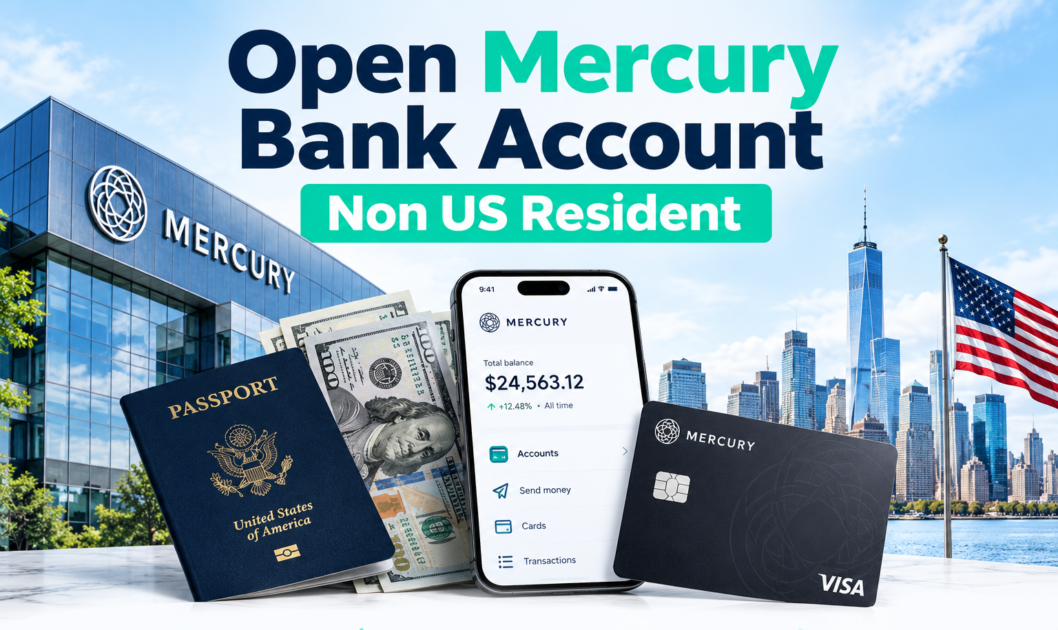
For example, Mercury states that it supports eligible US-registered companies founded by people living outside the United States, subject to its requirements and country restrictions. Relay Financial also accepts certain US businesses with non-US owners but maintains its own prohibited-country list.
You can review Mercury’s official eligibility and application requirements and Relay’s official prohibited-country list before proceeding.
How to Open a US Bank Account for Non-US Residents Step by Step
The following steps provide a practical starting point for international founders. The exact process depends on the provider and the type of account you want to open.
Step 1: Decide Whether You Need a US Company
First, identify whether you need a US business account for an existing US company or whether you are considering forming a US company specifically to access US payment services.
If you already own a US LLC or corporation, review the account requirements for that entity.
If you do not have a US company, research the business registration process before choosing a financial provider. Some providers require the business to be registered in the United States and to have existing or planned US operations.
A US LLC is not automatically necessary for every international payment service. Depending on your business model, a payment provider or multi-currency service available in your home country may be sufficient.
If you are still deciding whether to establish an LLC, read our guide to US LLC bank accounts for non-US residents.
Step 2: Form Your US LLC or Corporation, If Required
If your chosen provider requires a US-registered business, you will need to establish the appropriate legal entity.
Common formation documents include:
- Articles of Organization for an LLC.
- Articles of Incorporation for a corporation.
- A Certificate of Formation or equivalent document, depending on the state.
- An Operating Agreement for an LLC, if applicable.
- Ownership and management information.
The precise documents depend on your entity type and the financial provider’s requirements.
Founders commonly compare states such as Wyoming and Delaware when planning a US LLC. The right choice depends on business operations, legal considerations, costs, and ongoing compliance obligations—not simply on which state appears easiest for opening an account.
Read our comparison of Wyoming vs. Delaware LLCs for non-residents before choosing a state.
Remember: Company formation and bank account approval are separate processes. Do not form a company solely on the assumption that a particular account provider will accept it.
Step 3: Obtain an EIN When Required
An Employer Identification Number (EIN) is a federal tax identification number issued by the Internal Revenue Service (IRS). Many US business account applications request the company’s EIN.
International applicants whose principal place of business is outside the United States generally cannot use the IRS online EIN application. The IRS provides alternative application methods, including telephone, fax, and mail, subject to its current instructions and eligibility rules.
For eligible international applicants, the IRS lists the following options:
- Telephone: International applicants may call the IRS international EIN line at 267-941-1099 during its published operating hours.
- Fax: International applicants may fax Form SS-4 to the number specified by the IRS for applicants outside the United States.
- Mail: Applicants can send Form SS-4 to the IRS international operation address.
Check the latest instructions before submitting your application, as procedures and contact details can change.
Official references:
Use accurate information about your entity and responsible party. An EIN does not guarantee that a financial provider will approve your account, and it does not replace any required identity or business verification.
Step 4: Prepare a Valid Business Address
Address requirements are an important part of applying for a US business account from overseas.
Some providers accept an international principal business address. Others require particular documentation or have specific rules about which types of US addresses are acceptable.
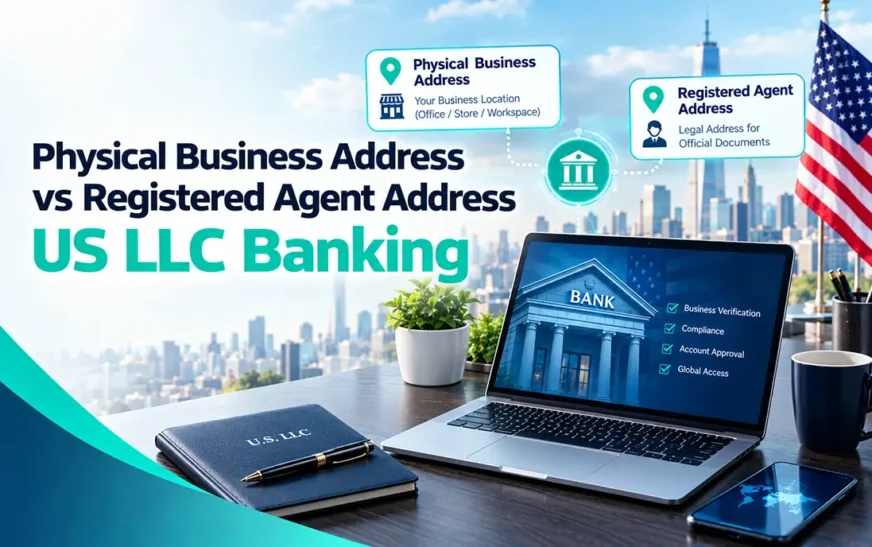
For example, Mercury says an eligible company’s principal business address can be in the United States or internationally. It does not accept a registered-agent address, PO box, or UPS Store address as the company’s principal business address. It also requires a physical residential address for each beneficial owner and does not accept PO boxes, mail drops, or commercial mail-receiving or virtual address services for that owner-address requirement.
These requirements should not be interpreted as a universal rule for every provider. Review the exact address policy of the account you intend to open.
Prepare the following information where applicable:
- The company’s actual principal business address.
- Your current residential address.
- Supporting address documents if requested.
- Your registered-agent information, if relevant to company formation.
- A clear distinction between the registered office, mailing address, and actual business location.
Never submit a false address or present a registered-agent address as a physical operating location when the provider does not permit it.
Step 5: Collect Your Identity and Business Documents
Preparing documents before you apply can help reduce avoidable delays.
The exact list varies by financial provider, entity type, ownership structure, and country. Commonly requested items include:
Personal documents
- Valid passport or another accepted government-issued identity document.
- Current residential address.
- Date of birth and contact information.
- Information about owners and controlling individuals.
Business documents
- LLC formation documents or corporate registration documents.
- EIN confirmation, if required.
- Operating Agreement or equivalent governance documents, where applicable.
- Details of the company’s owners and managers.
- Business website or an explanation of the company’s activity, if requested.
Business verification information
- Description of products or services.
- Countries where the business operates.
- Expected incoming and outgoing payments.
- Anticipated monthly transaction volume.
- Sources of business funding and revenue.
- Customer, supplier, or contract information if requested.
Providers may ask for additional documentation during their review. Submit genuine documents that accurately reflect your business and ownership structure.
Step 6: Choose a Provider That Accepts Your Country of Residence
Do not select a provider based only on its popularity or the fact that it serves US companies. Confirm that it accepts applicants with your actual residence and ownership details.
The following providers are examples to research, not a guarantee of eligibility.
| Provider | Potential use case | What to check |
|---|---|---|
| Mercury | Eligible US startups, LLCs, and corporations | Country restrictions, US operations, business address, owner verification |
| Relay Financial | Eligible US businesses needing business account management | Prohibited-country rules, business operations, address and document requirements |
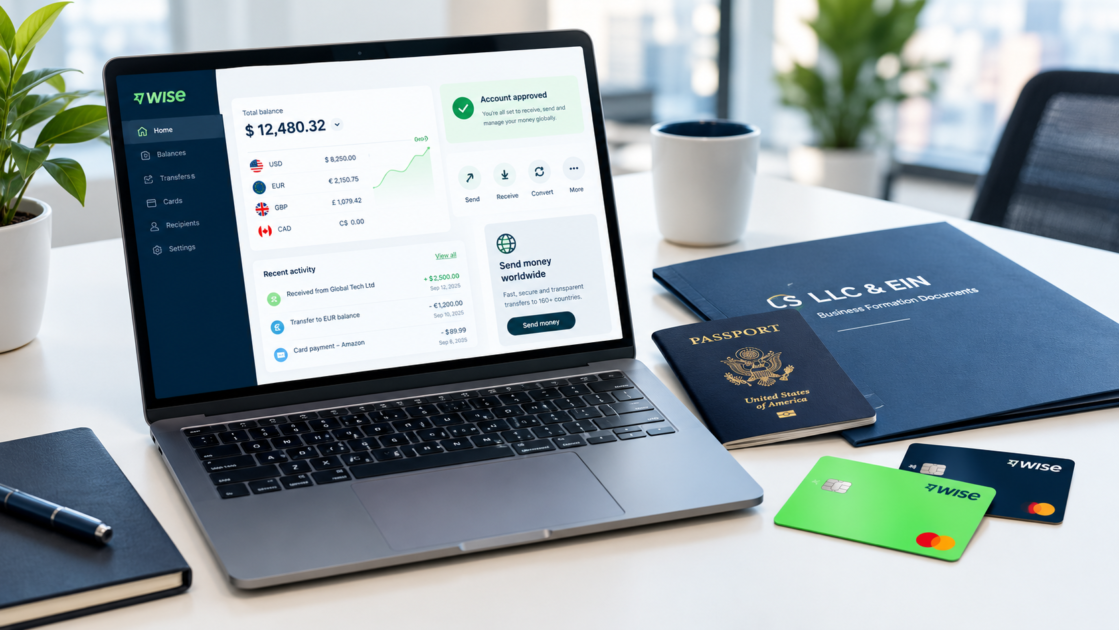
| Wise Business | International transfers and multi-currency services | Availability in your country, supported account details and business type |
| Payoneer | Receiving eligible international client or marketplace payments | Country eligibility, receiving methods, withdrawal options and fees |
To compare these providers in more detail, read our guide to the best US business bank accounts for non-residents.
Mercury and Relay offer US business account services to eligible businesses, but neither should be treated as a universal solution for every non-US founder. Wise Business and Payoneer are different types of financial services and may not provide the same features as a US business checking account.
For additional details, see our guides to opening a Mercury account as a non-US resident and Wise Business for non-US residents.
Step 7: Submit Your Application Accurately
Once you have checked eligibility and prepared your documents, complete the provider’s official application.
You may be asked to provide:
- Your company’s legal name and registration details.
- Its EIN and business structure, where required.
- Information about owners and beneficial owners.
- Your business and residential addresses.
- A description of business activities and customers.
- Information about expected transactions and the source of funds.
- Supporting identity and business documents.
Review the application carefully before submitting it. The information should be consistent with your company records, tax documents, website, contracts, and identity documents.
Do not exaggerate your US operations or use a misleading description to improve your chances of approval. If the provider requests clarification, respond with accurate supporting information.
Step 8: Complete Verification and Review the Account Terms
Submitting an application does not mean the account has been approved. The provider may request more information or documents before making a decision.
If your account is approved, review the account agreement and confirm:
- Which incoming payment methods are supported.
- Whether ACH transfers and domestic wires are available.
- Whether international wires are supported for your destinations.
- Any limits or fees that apply to your account.
- Whether debit cards are available for your location.
- How funds are held and what protections apply.
- What transactions or business activities are restricted.
For accounts offered through a financial technology company, identify the partner bank and understand the account’s legal structure. The FDIC explains that a nonbank fintech company is not itself FDIC-insured; deposit insurance depends on the underlying bank deposit arrangement and applicable conditions.
See the FDIC’s guidance on banking through third-party apps for more information.
Requirements for US, UK, and Gulf Founders
Your residence and citizenship can affect the application process, but the provider’s exact rules determine eligibility. Living in the UK or a Gulf country does not automatically qualify or disqualify you.
US founders
If you live in the United States and operate a US business, you may have access to a wider range of conventional bank and online business account options. Requirements will still depend on the bank, business structure, identity verification, and business activity.
A US address alone does not guarantee approval. Make sure your business details and documents meet the chosen bank’s requirements.
UK founders
UK-based entrepreneurs who own a US LLC or corporation should confirm whether the provider accepts applicants residing in the United Kingdom and whether it supports the company’s business model.
Before applying, prepare your passport, actual residential address, company formation documents, EIN if required, and information about your business operations.
Also consider whether you genuinely need a US business account or whether a multi-currency service that supports your UK business would meet your needs.
Gulf founders: UAE, Saudi Arabia, and other Gulf countries
Entrepreneurs living in the United Arab Emirates, Saudi Arabia, Qatar, Bahrain, Kuwait, or Oman should check the provider’s current eligibility policy for their specific country of residence.
Do not assume that all Gulf countries are treated identically. A provider’s rules may distinguish between country of residence, citizenship, business registration, business activity, and the identity of owners or financial controllers.
Prepare your actual residential address and supporting documents. If your business has customers or operations in the United States, be ready to explain those activities accurately when asked.
Pakistan-based founders and other restricted-country residents
Country restrictions can be decisive even when a founder has a valid US LLC and EIN.
As of the policies reviewed for this guide, Mercury’s published prohibited-country list includes Pakistan, and Relay’s prohibited-country list also includes Pakistan. Founders residing in Pakistan should therefore not assume they are eligible for these providers.
Rules can change, and the provider’s current policy should be checked before taking action. A US LLC, a US mailing address, or an EIN does not override a provider’s restrictions.
If you live in Pakistan or another restricted country, research services that explicitly support your residence and business structure. Verify their receiving and withdrawal options before relying on them for client payments.
Mercury vs. Relay: Which Should Non-US Founders Consider?
Mercury and Relay are often compared by international entrepreneurs who own US LLCs. Both have eligibility rules, and neither guarantees approval simply because a company is registered in the United States.
Mercury
Mercury may be worth evaluating if your company is US-registered, has existing or planned US operations, and meets its owner, address, industry, and country requirements.
Before applying, check its official eligibility guidance and current prohibited-country list.
Relay Financial
Relay may be worth considering if your business is registered and operating in the United States, your industry is supported, and all relevant owners meet its current eligibility requirements.
Its country restrictions are particularly important for international founders. Read Relay’s account-opening guidance and prohibited-country list before applying.
Which one is better?
There is no universal winner. Compare eligibility first, then review account features, payment options, fees, and the requirements for your business. If you are ineligible for a provider, comparing its features will not make it a workable option.
If you have already received an application rejection, read our guide on why Mercury bank applications get rejected. Do not submit repeated applications with inaccurate or altered information to get around a provider’s decision.
Common Reasons US Business Account Applications Are Rejected
An application can be declined for several reasons. The precise reason depends on the provider and the information reviewed.
Common issues include:
- The owner’s country of residence is not supported.
- The business operates in a restricted industry.
- The company does not meet the provider’s US business or operations requirements.
- The submitted address does not meet the provider’s rules.
- Identity or company documents are missing, unclear, or inconsistent.
- The business model or source of funds is not adequately explained.
- The expected transactions fall outside the provider’s supported activity.
- Ownership information is incomplete or cannot be verified.
How to reduce avoidable application problems
Before applying, confirm your country eligibility, check every address requirement, prepare accurate documents, and write a clear description of what your company does.
If the provider asks for additional information, answer truthfully and submit the documents requested. If your application is declined, review any explanation supplied by the provider and ask whether clarification or a new application is appropriate.
No legitimate guide can guarantee approval, and no particular LLC state or EIN application method can remove a provider’s country restrictions.
What Happens After You Open the Account?
Opening the account is only one part of running a US business. You should also maintain accurate company records and understand any ongoing requirements.
After approval:
- Keep company income and expenses properly recorded.
- Use the account only for permitted business activity.
- Monitor incoming payments, outgoing transfers, and fees.
- Update your details when the provider requires it.
- Maintain copies of formation documents, tax records, invoices, and contracts.
- Review your federal, state, and any applicable foreign tax obligations.
- Check the provider’s current terms before making unusual or high-value transfers.
Foreign-owned US businesses can have tax and reporting obligations that depend on their legal structure, ownership, income, and transactions. An EIN or business bank account does not determine your tax status by itself.
Consult the relevant official tax guidance or a qualified tax professional when you are unsure which filings apply to your company.
Frequently Asked Questions
Can I open a US bank account without living in the United States?
Yes, some providers accept eligible US businesses whose owners live abroad. Requirements vary by provider, and some countries and business activities are restricted.
Do I need a US LLC to open a US business bank account?
Many online business account providers discussed in this guide require a US-registered company. Other financial services may support businesses registered elsewhere. Check the account’s requirements before forming a company.
Do non-US residents need an SSN to obtain an EIN?
An SSN is not always required for a foreign applicant to obtain an EIN. The IRS instructions for Form SS-4 explain how international applicants without, and ineligible for, an SSN or ITIN should complete the responsible-party information. Follow the current IRS instructions for your circumstances.
Can I use a registered-agent address for a US business account?
Not always. Address rules vary by provider. Mercury, for example, does not accept a registered-agent address as the company’s principal business address. Use the actual address information requested by the provider.
Can UK founders open a US business bank account?
Some providers support eligible US businesses founded by UK residents. Approval depends on the provider’s current country rules, business requirements, and verification process.
Can UAE or Saudi Arabia residents open a US business account?
Some international founders may qualify, but eligibility must be checked for the specific country of residence and business. Do not assume that approval policies are identical across the Gulf region.
Can Pakistan residents open Mercury or Relay accounts for a US LLC?
Mercury’s current published prohibited-country list includes Pakistan, and Relay’s published list also includes Pakistan. Residents of Pakistan should verify the latest rules and should not assume a US LLC makes them eligible.
How long does the application process take?
There is no universal processing time. It depends on the provider, the completeness of your documents, and whether additional verification is required. Check the provider’s current guidance and avoid relying on unofficial approval-time promises.
Does getting an EIN guarantee a business bank account?
No. An EIN is a tax identification number, not an account approval. Providers independently review eligibility, business information, ownership, address, and other requirements.
Final Verdict: Opening a US Business Account as a Non-US Resident
International founders can explore US business account options without necessarily living in the United States, but success depends on meeting the provider’s actual requirements.
The practical approach is to:
- Confirm whether you need a US company or a different payment solution.
- Register the business if required and obtain an EIN when applicable.
- Prepare genuine identity, address, and company documents.
- Check eligibility using your real country of residence.
- Compare supported payment methods, fees, and account protections.
- Submit an accurate application and respond to verification requests.
For founders based in the UK or Gulf countries, review the current eligibility requirements for your specific residence and business structure. For founders in Pakistan or another restricted country, check the restrictions first rather than assuming a US LLC will solve the eligibility issue.
For more guidance, visit our US LLC bank account guide for non-US residents, our Mercury application rejection guide, and our Sources and References page.
Editorial note: Financial provider requirements and country restrictions can change. Always confirm current eligibility, fees, and terms with the official provider before applying. This article is for informational purposes and is not legal, tax, or financial advice.How to Set Up a US Stripe Account for Non Residents (2026)