

Choosing the best business account for international payments can help your company receive money from overseas clients, pay international suppliers, manage multiple currencies, and reduce unnecessary conversion costs. However, the right option depends on where you live, where your business is registered, which currencies you use, and how your customers send payments.
Some services specialize in international transfers and currency conversion, while others focus on business banking for eligible US companies. Not every provider supports every country or business structure, so checking eligibility before applying is essential.
In this guide, we compare Wise Business, Payoneer, Mercury, and Relay Financial to help international entrepreneurs, freelancers, and small businesses choose a suitable payment solution.
Best Business Accounts for International Payments: Quick Comparison
| Provider | Best for | Main advantage | Important consideration |
|---|---|---|---|
| Wise Business | International transfers and multiple currencies | Transparent conversion pricing and multi-currency features | Availability and account details vary by country |
| Payoneer | Freelancers, agencies, and global marketplace sellers | Receiving payments through supported payment methods and platforms | Fees depend on payment method, currency, and location |
| Mercury | Eligible US startups and LLCs | US business account features and international wire transfers | Country, business, and owner eligibility requirements apply |
| Relay Financial | Eligible US small businesses | Business banking features and expense organization | Account-opening and international-wire restrictions apply |
Quick recommendation: Consider Wise Business if multi-currency transfers are your main priority. Payoneer may suit freelancers and businesses receiving payments from supported platforms or international clients. Mercury and Relay are worth evaluating if you operate an eligible US company and need US business banking features alongside international payments.
No provider is the best choice for every business. Compare the total cost, supported payment methods, eligibility rules, and your customers’ preferred ways to pay before opening an account.
1. Wise Business: Best for Multi-Currency Payments
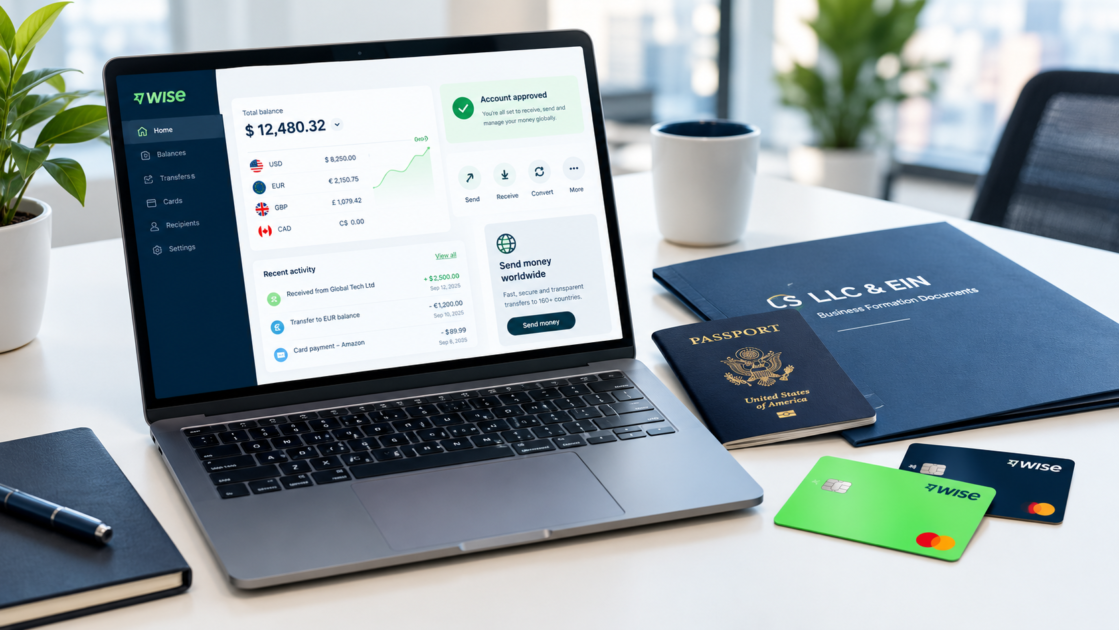
Wise Business is a payment and multi-currency service designed to help businesses send, receive, convert, and hold money in supported currencies. It can be useful for companies working with customers, contractors, and suppliers in different countries.
Key features
- Send international transfers in supported currencies.
- Convert money using the exchange rate and fee shown for the transaction.
- Receive payments using local account details where available.
- Hold balances in multiple currencies, subject to eligibility.
- Manage business payments through online tools.
Advantages
Wise Business can be useful when a company receives revenue in one currency but needs to pay expenses in another. For example, a business receiving payments in USD and paying a supplier in EUR may be able to manage both currencies through supported Wise features.
The service displays transfer costs before you confirm a transaction. However, fees depend on the currencies, payment route, account location, and transfer method. Some wire transfers may have separate fixed charges.
Limitations to consider
Wise Business is not a traditional bank account in every market, and its features are not identical in every country. Access to account details, cards, and specific currencies depends on local availability and eligibility.
For example, businesses and users with addresses in certain countries may not be eligible for particular account details. Check the current Wise availability and account-details rules for your actual country of residence and business registration before applying.
Who should consider Wise Business?
Wise Business may be a suitable option for:
- Businesses that regularly convert between currencies.
- Consultants and agencies working with international clients.
- Companies paying overseas contractors or suppliers.
- Eligible businesses that need to manage several currency balances.
Review the official Wise Business pricing page and confirm that the features shown apply to your country before deciding.
2. Payoneer: Best for Freelancers and International Client Payments
Payoneer provides cross-border payment services for businesses, freelancers, service providers, and sellers working with supported marketplaces and international customers.
It may be particularly useful if your business receives payments from overseas clients or platforms that support Payoneer.
Key features
- Receive eligible payments through supported payment methods.
- Use receiving account details where available and approved.
- Transfer funds to supported bank accounts.
- Manage balances and payments through an online account.
- Access services for multiple currencies, depending on eligibility.
Advantages
Payoneer can be useful for freelancers, software developers, digital agencies, and online sellers who work with international customers. It offers payment options designed for cross-border business activity and supports a wide range of countries and currencies, subject to product availability.
Its receiving options may also be convenient when a client or platform supports Payoneer but does not offer your preferred alternative.
Fees to check before applying
Payoneer’s pricing can vary by country, payment method, account type, and transaction. Depending on the payment route, charges may apply when receiving payments, converting currencies, withdrawing funds, or using certain payment methods.
For example, Payoneer’s published pricing lists different fees for card payments, ACH bank debits, and receiving payments in certain currencies. These rates should not be treated as universal prices for every account.
Before choosing Payoneer, check:
- Whether receiving payments from your clients is supported.
- The fee for each payment method you plan to use.
- Currency-conversion and withdrawal costs.
- Whether your country and business activity are eligible.
- Any account or inactivity fees that apply to your specific account.
Who should consider Payoneer?
Payoneer may be worth evaluating if you are a freelancer, agency, marketplace seller, or service business receiving cross-border payments through supported channels.
It may be less suitable if you specifically need a conventional US business checking account with the same features as a bank account. Review the available product and payment options for your location.
For current details, visit Payoneer’s official pricing page.
3. Mercury: Best for Eligible US Startups and LLCs
Mercury provides financial technology services for businesses, including eligible US startups and LLCs. It offers business account features and payment tools that can help qualifying companies manage US-dollar transactions and international transfers.
Mercury should not be treated as a universal international account for anyone who owns a US LLC. Business eligibility, owner residence, company operations, and other requirements can affect whether an application is accepted.
Key features
- Business account features for eligible companies.
- Domestic US payment functionality.
- International wire transfers to supported destinations.
- Online account management and transaction monitoring.
- Tools designed for startups and business operations.
Advantages
Mercury may suit founders who have a qualifying US company and need to receive business revenue, manage company expenses, and send international wires.
For a business that primarily operates in USD, keeping eligible business funds in a US business account can simplify some payment workflows. The exact services and transfer limits available depend on the account and destination.
Eligibility and limitations
Mercury has specific requirements for the businesses and founders it serves. Applicants should review the current eligibility rules, supported countries, business-address requirements, and documentation requirements before submitting an application.
A US LLC alone does not guarantee approval. Founders should provide accurate information about ownership, business activity, address, and expected transactions.
Also distinguish between account eligibility and payment eligibility. A company may qualify for an account but still face restrictions on particular international wire destinations, transactions, or card usage.
Who should consider Mercury?
Mercury may be worth considering if:
- Your company is registered in the United States.
- Your business and owners meet the provider’s current requirements.
- You need US business account features and international wire capabilities.
- Your payment destinations and business activities are supported.
If you are researching US accounts as a non-US resident, read our related guides:
- US LLC Bank Account for Non-US Residents
- How to Open a Mercury Account as a Non-US Resident
- Why Mercury Bank Applications Get Rejected
These guides cover the US business account application process in more detail.
4. Relay Financial: Best for Eligible US Businesses Managing Expenses
Relay Financial offers business banking services and tools designed to help eligible companies organize their finances. Businesses can use its features for account management, team spending, and supported domestic or international payments.
Relay is different from a service focused primarily on converting currencies. It is more relevant to businesses that need an organized US business banking setup and meet its eligibility requirements.
Key features
- Business account management for eligible companies.
- Tools for organizing funds and business expenses.
- Team access and spending-management features.
- Domestic payment options.
- International wires for eligible accounts and transactions.
Advantages
Relay may be useful for small businesses that want to separate funds for operating expenses, taxes, payroll, or other business needs. Its account-management features can help teams keep business transactions organized.
International wire availability depends on the account, destination country, owner eligibility, and transaction purpose. Fees and delivery times may also vary by payment network and destination.
Eligibility limitations
Relay publishes a list of countries and regions whose residents or citizens are not eligible to open an account. Its current restrictions include Pakistan for account opening. Therefore, a founder residing in Pakistan should not assume that forming a US LLC makes them eligible for Relay.
Relay also has separate rules for international wires. The account-opening rules and international-payment rules are not identical, so applicants should review both when relevant.
Who should consider Relay?
Relay may be worth evaluating if you operate an eligible US business and want business account management, expense organization, and supported payment options.
If your primary goal is simply to receive payments from international clients, compare Relay with payment services that specifically support your payment method and country.
For current restrictions, see Relay’s official prohibited-country list and its international wire information.
How to Choose the Best Business Account for International Payments
Before opening an account, identify how your business receives and sends money. A service that works well for a freelancer may not be the best fit for a US LLC paying international suppliers.
1. Check your country eligibility first
Confirm eligibility using your real country of residence, citizenship where relevant, business registration country, and ownership details.
Do not assume that registering a company in the United States automatically makes every US financial service available to you. Providers may have separate restrictions for account opening, card usage, receiving funds, and international wires.
2. Compare the complete transaction cost
The advertised transfer fee is only one part of the total cost. Check the following:
- Transfer or receiving fee.
- Currency-conversion fee and exchange rate.
- SWIFT or intermediary bank charges.
- Withdrawal or payout fee.
- Monthly, account, or inactivity charges where applicable.
A provider with a low upfront transfer fee may still cost more if its exchange rate or receiving method is less favorable for your transaction.
Example: Suppose a client pays your business $2,000. Compare the amount that actually reaches your account after receiving fees, conversion costs, and withdrawal charges. Use the provider’s current quote for your currency pair rather than relying on an old fee example.
3. Check how your clients will pay you
Different customers may prefer different payment methods, including:
- Local bank transfers.
- ACH payments from eligible US bank accounts.
- International SWIFT wires.
- Card payments through supported services.
- Marketplace or platform payouts.
Choose a service that supports the payment method your clients can realistically use. Not every account offers every method.
4. Consider which currencies you need
If your business earns USD but pays expenses in GBP or EUR, multi-currency features may be useful. If you mainly receive USD and pay US-based expenses, an eligible US business account may be more practical.
List the currencies you receive, the currencies you spend, and how often you convert between them before comparing providers.
5. Review account protections and service terms
Understand whether the provider is a bank, a financial technology company working with partner banks, or a payment service. Check the relevant account agreement, protection arrangements, complaint process, and terms for holding or transferring funds.
Do not assume that every service offers the same deposit insurance, account protections, or legal relationship.
Which International Business Account Is Best for Different Businesses?
The most suitable option depends on your business model and eligibility.
| Business type | Options to evaluate | Main priority |
|---|---|---|
| Freelancer receiving overseas client payments | Payoneer or eligible Wise services | Receiving and withdrawing payments economically |
| Agency working with clients in multiple currencies | Wise Business or Payoneer | Currency conversion and supported payment routes |
| US startup with qualifying owners | Mercury or Relay | US business account functionality and eligible international payments |
| US LLC owned by a non-US resident | Mercury, Relay, and other providers only after eligibility checks | Owner eligibility, documentation, and account requirements |
| Business paying overseas suppliers | Wise Business or eligible US business accounts | Destination support, wire fees, speed, and traceability |
This table is a starting point, not a guarantee that any provider will accept a particular applicant. Verify the current terms for your country and business structure.
Are US Business Accounts Suitable for Non-US Residents?
Some financial providers accept eligible US companies with non-US owners, but eligibility depends on the provider’s policies and the applicant’s circumstances.
A non-US resident who owns an LLC may need to provide documents such as:
- US company formation documents.
- Employer Identification Number (EIN), if required.
- Government-issued identification.
- Business ownership and operating information.
- A qualifying business address and supporting evidence.
- Details about the source of funds and expected transactions.
The precise requirements vary by provider. Do not submit a registered-agent address as a physical operating address unless the provider explicitly permits it. Never use a false address or inaccurate business description to bypass eligibility rules.
For a side-by-side comparison, read our guide to US business bank accounts for non-residents, or see the US LLC bank account guide for the application process.
What Should Pakistan-Based Entrepreneurs Know?
Entrepreneurs based in Pakistan should check country eligibility before spending time preparing an application.
For example, Relay’s published account-opening restrictions include Pakistan. Wise also limits access to certain features and account details depending on the customer’s address and region. Mercury has its own eligibility rules, which should be reviewed directly rather than inferred from the fact that a business is registered in the United States.
Payoneer’s services and fees also depend on the user’s location, account type, and payment method. Check whether the specific receiving, conversion, and withdrawal features you need are available for your account.
If you are based in Pakistan:
- Confirm that the provider accepts customers with your actual residence and citizenship details.
- Check whether your business type and registration country are supported.
- Confirm that you can receive the specific currencies and payment types you need.
- Review withdrawal options and conversion costs before accepting client payments.
- Keep your identity, business, tax, and payment information accurate and consistent.
A company formation service or a US LLC does not override a financial provider’s country restrictions.
Common Mistakes to Avoid When Choosing an International Business Account
Choosing based on one advertised fee
Always compare the full cost of receiving, converting, sending, and withdrawing funds.
Applying before checking eligibility
An account may not be available to residents of your country, even if your company is registered elsewhere.
Assuming every account supports SWIFT wires
Some providers offer local transfer methods, some offer international wires, and others offer a combination. Verify the route and destination before relying on it.
Confusing a payment service with a traditional bank
Payment accounts and fintech platforms can be useful, but their legal structure, protections, and services may differ from traditional bank accounts.
Providing inaccurate business information
Incorrect addresses, inconsistent company details, or vague descriptions of business activity can create verification problems. Provide truthful, consistent information and submit only documents you are authorized to use.
Frequently Asked Questions
What is the best business account for international payments?
The best option depends on your location and payment needs. Wise Business may suit eligible businesses that prioritize multi-currency transfers. Payoneer may suit freelancers and sellers receiving payments through supported channels. Mercury and Relay may suit eligible US businesses that need US business account features and supported international payments.
Which business account has the lowest international transfer fees?
There is no universal cheapest provider. Fees depend on the currency pair, payment method, destination, conversion rate, and account location. Compare the final amount received using a live quote before sending money.
Can non-US residents open a US business account?
Some providers accept eligible US companies with non-US owners, but restrictions and documentation requirements vary. Company registration alone does not guarantee approval. Check the provider’s current rules before applying.
Can a Pakistan resident use Mercury or Relay for a US LLC?
Do not assume eligibility solely because you own a US LLC. Mercury has its own country and business requirements, and Relay’s current account-opening prohibited-country list includes Pakistan. Check the official rules for your actual circumstances before applying.
Is Wise Business a bank account?
Wise Business is a financial service offering multi-currency and international payment features. Its legal structure and available features differ by market, so it should not automatically be treated as equivalent to a traditional bank account.
Is Payoneer good for international business payments?
Payoneer may be useful for freelancers, agencies, and online sellers who receive payments through supported methods. Review the available receiving options, withdrawal methods, fees, and local eligibility before choosing it.
Should I open more than one business payment account?
Some businesses use more than one provider for different purposes, such as receiving client payments through one service and managing eligible US business funds through another. Before doing so, verify the terms of each provider, keep accurate accounting records, and ensure that each account is used for permitted business activity.
Final Verdict: Choosing the Best Business Account for International Payments
For international entrepreneurs, the best business account is the one that supports their actual country, business structure, payment methods, and currencies at a reasonable total cost.
- Choose Wise Business to investigate multi-currency transfers and conversion features, if available in your market.
- Choose Payoneer to investigate international client, marketplace, and freelancer payment options.
- Choose Mercury if you operate an eligible US company and need US business account features with supported international transfers.
- Choose Relay if your US business qualifies and you want business account management and expense organization.
Before opening an account, verify current country eligibility, receiving options, transfer fees, and withdrawal routes directly with the provider. Financial products and restrictions can change, so official terms should take priority over general recommendations.
For non-US founders, our guide to US LLC bank accounts for non-US residents explains the broader account-opening considerations. You can also consult our Sources and References page for further research.How to Set Up a US Stripe Account for Non Residents (2026)
Pay Global Hub provides educational information for non-US founders and global freelancers. Our articles reference official provider resources and IRS documentation, with sources and last-verified dates. We are not a bank, law firm, or CPA firm, and our content does not constitute financial, legal, or tax advice.